In today’s world of sleek, minimalist laptops, one thing has become painfully clear: we’ve traded a wealth of ports for slim designs. If you’ve ever found yourself needing to connect an external monitor, a flash drive, and charge your laptop all at once, you’ve felt the pinch. This is where the Usb C Hdmi Usb Hub transforms from a simple accessory into an essential productivity powerhouse. It’s the single-cable solution that bridges the gap between your powerful, portable laptop and a full-fledged desktop setup.
As the content creators at Meeob, we’ve spent over a decade testing, dissecting, and reviewing these devices. We understand that choosing the right hub can feel overwhelming. That’s why we’ve created this comprehensive guide to demystify the specs, explain the features that matter, and help you find the perfect hub for your needs.
What Exactly is a USB C HDMI USB Hub?
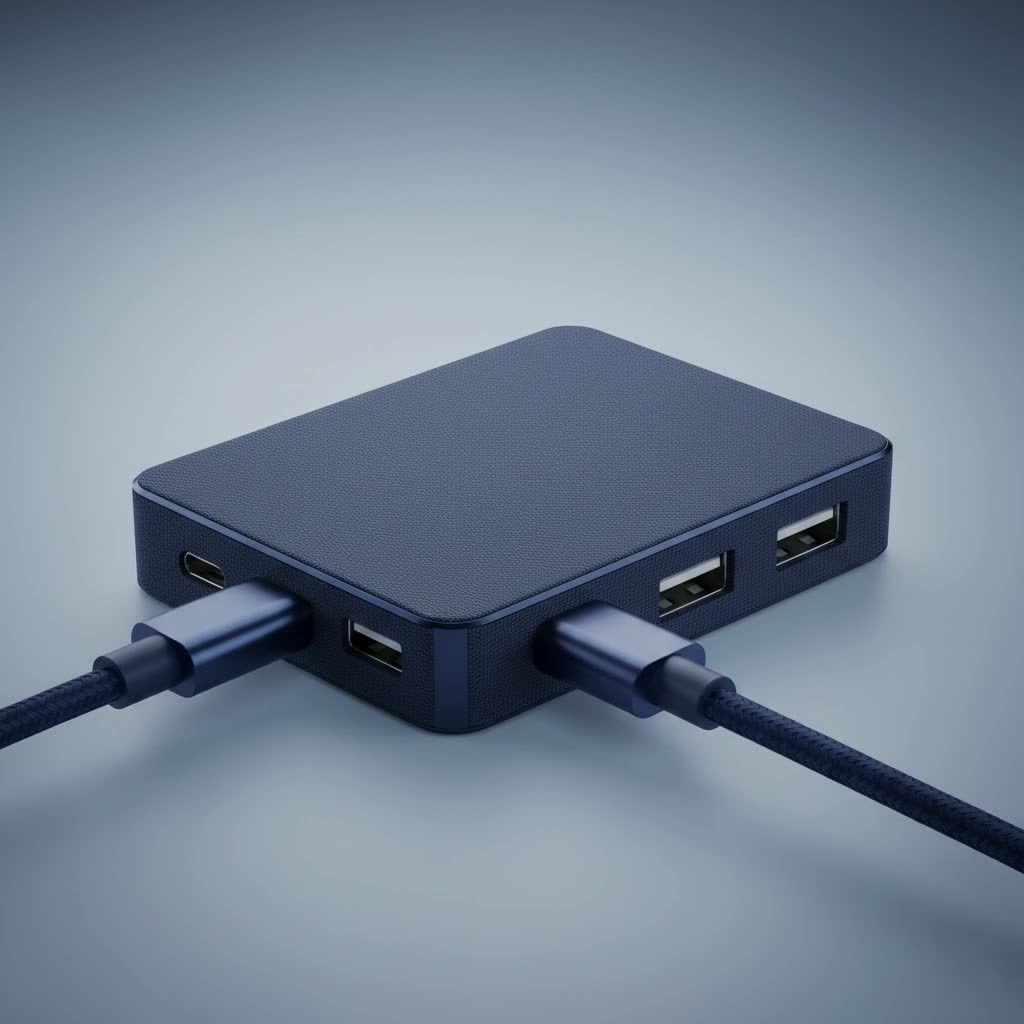
Think of a usb c hdmi usb hub as a multiport adapter that acts like a central station for all your peripherals. It plugs into a single USB-C port on your laptop, tablet, or even smartphone and instantly expands it into a variety of different connections. While designs vary, most hubs include a combination of essential ports.
The core function is to provide an HDMI port, allowing you to output your device’s display to a larger screen like a monitor, TV, or projector. Alongside this, you’ll typically find:
- USB-A ports: For connecting legacy devices like keyboards, mice, flash drives, and external hard drives.
- USB-C Power Delivery (PD) port: This allows you to charge your laptop through the hub, so you don’t lose your only USB-C port while the hub is connected.
- SD and microSD card readers: A lifesaver for photographers and videographers who need to transfer files quickly.
- Ethernet port: For a faster, more stable wired internet connection than Wi-Fi.
Decoding the Specs: What Really Matters When Choosing a Hub
The market is flooded with options, and the technical jargon on product pages can be confusing. Let’s break down the most critical features you need to examine to ensure you get a hub that performs as expected.
HDMI Port: The 4K@60Hz vs. 4K@30Hz Showdown
This is arguably the most important specification for a usb c hdmi usb hub. It determines the quality and smoothness of the video output to your external display.
- 4K@30Hz: This means the hub can send a 4K resolution signal to your monitor, but it will only refresh the image 30 times per second. For static work like writing documents or browsing the web, this is acceptable. However, when you move your mouse, scroll, or watch a video, it will appear choppy and laggy.
- 4K@60Hz: This is the gold standard. Refreshing the image 60 times per second results in a buttery-smooth experience. Mouse movements are fluid, videos play seamlessly, and it’s much easier on the eyes for extended work sessions.
|
Our Picks for the Best USB Hub in 2026
As an Amazon Associate I earn from qualifying purchases.
|
||
| Num | Product | Action |
|---|---|---|
| 1 | USB C Docking Station with M.2 NVMe SSD Enclosure 10Gbps, 9 in 1 USB-C Hub, Type C SSD Slot with 4K@60Hz HDMI, USB 3.2 Gen2, PD100W, SD/TF Card Reader, Laptop Docking Station for Dell/HP/Lenovo/Mac |

|
| 2 | Powered USB Hub, Wenter 11-Port USB Splitter Hub (10 Faster Data Transfer Ports+ 1 Smart Charging Port) with Individual LED On/Off Switches, USB Hub 3.0 Powered with Power Adapter for Mac, PC |
|
| 3 | Anker Laptop Docking Station Dual Monitor, 8-in-1 USB C Hub, 4K Dual Monitor with 2 HDMI, 1 Gbps Ethernet Hub, 85W Power Delivery, SD Card Reader for MacBook Pro, XPS and More (Charger not Included) |
|
| 4 | 3-in-1 USB C Splitter, 3 in 1 Type-C Charging Data Cable Data Transmission Decive Charging Adapter Power Charger Equipment for ome Office Use, Fast & Efficient |
|
| 5 | 13 in 1 USB C Docking Station - Dual Monitor, Triple Display, 8 USB C/A Ports, Ethernet, Audio - LIONWEI USB C Hub for MacBook,Dell,HP,Lenovo,Surface |
|
| 6 | UGREEN USB 3.0 Hub, 4 Ports USB A Splitter Ultra-Slim USB Expander for Mouse, Keyboard, Flash Drive, U Disk, Printer Compatible with Laptop, Desktop PC, Xbox, PS5, and More |
|
| 7 | USB Hub 3.0, 7-Port USB Hub Splitter with Individual On/Off Switches and Lights, 3.2ft/1m Long Cable Compatible with MacBook, Laptop, Surface Pro, PS4, PC, Flash Drive, Mobile HDD |
|
| 8 | P9R PRO USB C Hub Ethernet, 10 in 1 USB Docking Station 10Gbps with 4K@60Hz HDMI, USB C and 2 USB A 3.2, LAN, 2 USB A 2.0, PD 100W, SD/TF Ports, USB to Ethernet Adapter for PC, iPhone 16/15, Mac |
|
| 9 | Anker USB Hub 4 Ports with 5Gbps Data Transfer, Multiple USB 3.0 Hub, USB Splitter for Laptop, Extender for A Port Laptop, PC, Desktop and More [Charging Not Supported](0.7 ft USB-A) |
|
| 10 | Powered USB Hub 10Gbps, intpw 9-Port USB 3.2 Hub, USB C Hub with USB A/USB C 3.2, 4 USB 3.0, 2 PD 45W Charging Ports, 65W Power Adapter and 3.3FT Cable, Aluminum USB Hub for Laptop, iPhone 17/16/15,PC |
|
Expert Take by Alex Carter, Lead Hardware Analyst at Meeob: “We almost always recommend a hub capable of 4K@60Hz. The difference in user experience is night and day. Once you’ve worked on a 60Hz display, going back to 30Hz feels like a significant downgrade. It’s worth the small extra investment for a smoother, more professional setup.”
To achieve 4K@60Hz, you need a hub that supports at least the HDMI 2.0 standard. Always check this detail in the product specifications.
USB Ports: It’s All About Speed
Not all USB ports are created equal. The USB-A ports on your hub will likely be either USB 2.0 or USB 3.0.
- USB 2.0: Offers a maximum data transfer speed of 480Mbps. This is fine for connecting a mouse or keyboard, but it will be incredibly slow for transferring large files. A 10GB file could take several minutes.
- USB 3.0 (or USB 3.1 Gen 1 / USB 3.2 Gen 1): These all refer to the same speed of 5Gbps. This is over ten times faster than USB 2.0 and is ideal for connecting external SSDs or flash drives for quick file transfers.
Look for hubs that offer at least one USB 3.0 port for your high-speed data needs.
Power Delivery (PD): Charge Your Laptop Through the Hub
Power Delivery is a non-negotiable feature. A hub with a PD passthrough charging port allows you to connect your laptop’s USB-C charger to the hub, which then passes power through to your laptop. This means you can run an external monitor, use your peripherals, and charge your device all through a single port.
Pay attention to the wattage. Most hubs support up to 100W of power delivery, but some of that power (usually 5-15W) is used to operate the hub itself. For a 16-inch MacBook Pro or a powerful Windows laptop, a 100W PD port is recommended to ensure full-speed charging.
Compatibility Check: Will It Work With Your Device?
This is a crucial step that many people overlook. For a usb c hdmi usb hub to output video, the USB-C port on your host device (your laptop or tablet) must support DisplayPort Alternate Mode (DP Alt Mode).
DP Alt Mode is a feature that allows a USB-C port to transmit a video signal. Unfortunately, not all USB-C ports have it. Some are for data transfer and charging only.
How to check for compatibility:
- Look for a symbol: Many laptops with video-enabled USB-C ports have a small DisplayPort logo (a ‘D’ with a ‘P’ inside) or a Thunderbolt logo (a lightning bolt) next to the port.
- Check your device’s specifications: The surest way is to check the manufacturer’s website for your specific model. Look for terms like “USB-C with DisplayPort Alt Mode” or “Thunderbolt 3 / 4.”
- General rule of thumb: Most modern high-end and mid-range laptops from brands like Apple (MacBook Pro/Air), Dell (XPS), HP (Spectre, Envy), and Lenovo (ThinkPad) have this feature. Budget laptops are less likely to include it.
How to Choose the Right USB C HDMI USB Hub for You
To simplify your decision, we’ve broken down user needs into a few common profiles. Find the one that best describes you.
| User Profile | Key Needs | Recommended Hub Features |
|---|---|---|
| The Casual User | Connect to a TV for streaming, light web browsing on a monitor. | 4K@30Hz HDMI, 1-2 USB 3.0 ports, 60W Power Delivery. |
| The Remote Worker | Full-time desk setup, multiple peripherals, video conferencing. | 4K@60Hz HDMI, 2+ USB 3.0 ports, 100W Power Delivery, Ethernet port. |
| The Creative Pro | Photo/video editing, fast file transfers, high-res display. | 4K@60Hz HDMI, multiple USB 3.0/3.1 ports, SD/microSD card reader (UHS-II), 100W PD. |
| The Gamer | High refresh rate monitor for smooth gameplay, stable connection. | 4K@60Hz (or 1080p@120Hz) HDMI, Ethernet port, USB-A for controllers/headsets. |
Frequently Asked Questions (FAQ)
What’s the difference between a USB-C hub and a docking station?
A USB-C hub is typically smaller, bus-powered (drawing power from the laptop), and portable. A docking station is a larger, stationary unit with its own power adapter, often supporting more ports and multiple external displays.
Can a cheap USB-C hub damage my laptop?
Yes, it’s possible. Poorly made, non-compliant hubs can have electrical issues that could potentially damage your laptop’s ports. It’s always best to buy from reputable brands that adhere to USB-IF standards.
Do I need to install drivers for a USB C HDMI hub?
For the vast majority of modern hubs and operating systems (Windows, macOS, ChromeOS), they are plug-and-play. No drivers are required.
Can I connect two monitors with one hub?
Most standard USB-C hubs only support a single external display. To connect two or more, you typically need a more advanced Thunderbolt hub or a dedicated docking station that explicitly supports multiple video outputs.
Why isn’t my HDMI display working through the hub?
The most common reason is that your laptop’s USB-C port does not support DP Alt Mode. Other potential issues could be a faulty HDMI cable or a compatibility issue between the hub and your specific monitor. Always check the basics first!
Conclusion: The Hub of Your Digital Life
The humble usb c hdmi usb hub is more than just an adapter; it’s a key that unlocks the full potential of your modern laptop. By expanding a single port into a versatile array of connections, it provides the flexibility to create a powerful workstation anywhere.
When making your choice, prioritize the features that matter most to your workflow. For most people, this means insisting on a hub with 4K@60Hz HDMI for a smooth visual experience and 100W Power Delivery for hassle-free charging. By investing in a quality hub from a trusted brand, you’re not just buying an accessory—you’re investing in a more efficient, productive, and clutter-free digital life.
