A USB expansion hub is a small device that plugs into a single Universal Serial Bus (USB) port on your computer, providing multiple additional ports. This allows users to connect various peripherals simultaneously, such as a keyboard, mouse, external hard drive, printer, and webcam, using only one of the computer’s built-in ports. These hubs are essential for modern, minimalist laptops that often lack sufficient connectivity options, transforming a single port into a versatile connection point for a productive and clutter-free workspace.
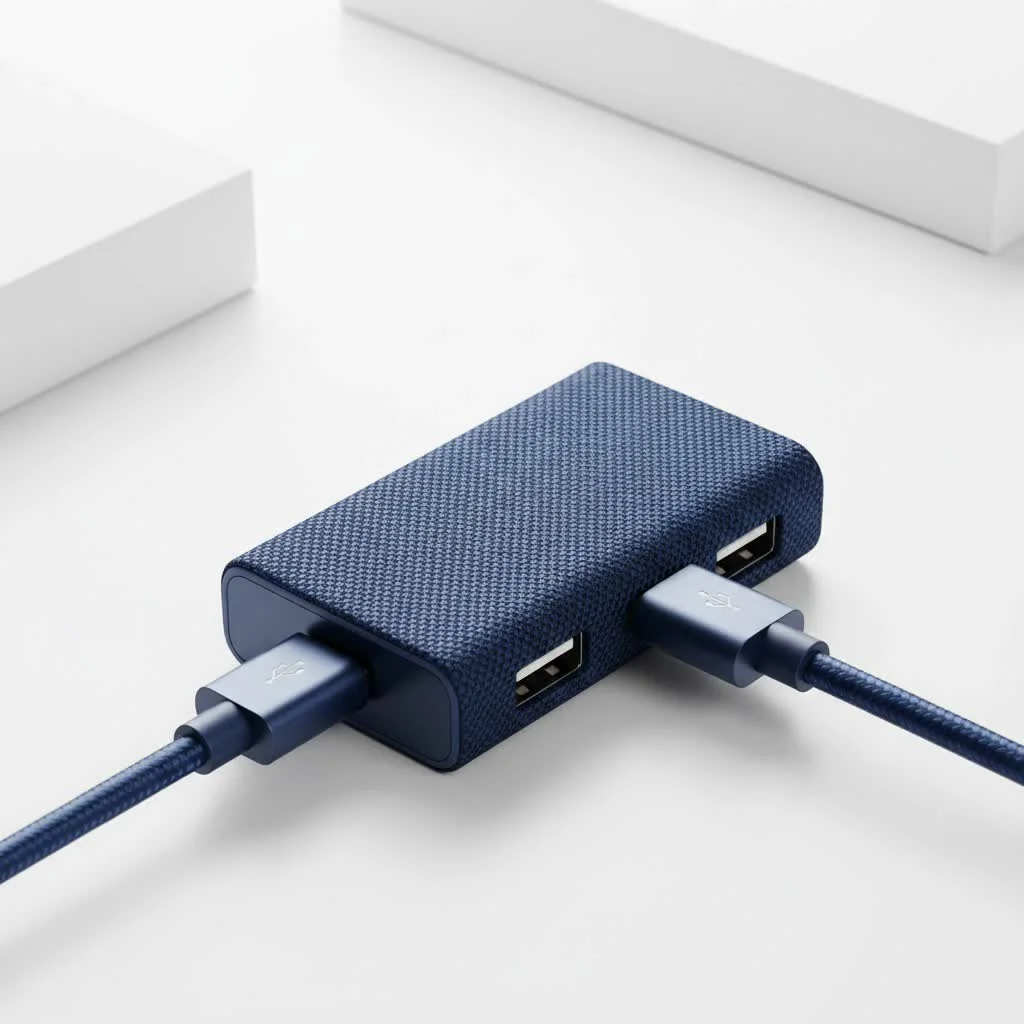
What is a USB Expansion Hub?
At its core, a USB expansion hub is a small device that plugs into a single Universal Serial Bus (USB) port on your computer and offers multiple extra ports. This allows you to simultaneously connect a variety of peripherals—such as a keyboard, mouse, external hard drive, printer, and webcam—using just one of your computer’s built-in ports. It’s a simple solution to a very common problem, instantly boosting your device’s connectivity and making your digital life significantly easier. For expert usb hubs reviews on this site.
Powered vs. Non-Powered: Which One Do You Need?
One of the first decisions you’ll face when choosing a hub is whether to get a powered or a non-powered model. The difference is critical and depends entirely on what you plan to connect.
Non-Powered (Bus-Powered) Hubs
A non-powered hub draws all its electricity directly from the computer it’s connected to. This makes it incredibly portable and convenient, as there’s no extra power adapter to carry around.
- Best for: Low-power devices like a mouse, keyboard, flash drives, or a game controller.
- Limitations: The power supplied by a single computer port is limited. If you connect too many devices, or even one power-hungry device, you may experience connection drops or find that your peripherals don’t work at all.
Powered Hubs
A powered hub comes with its own external AC adapter that plugs into a wall outlet. This means it provides its own dedicated power source to every connected device, ensuring each port gets the full voltage it needs to function correctly.
- Best for: High-power devices such as external hard drives, SSDs, webcams, printers, or for charging your smartphone.
- Advantage: Stability is the key benefit. You can use every port simultaneously without worrying about overloading the hub or your computer’s USB port. “For anyone creating a permanent desk setup, a powered hub is a no-brainer,” notes David Chen, a hardware analyst. “It guarantees that high-performance peripherals, like external drives used for video editing, receive consistent power and won’t fail during a critical task.”
How to Choose the Right USB Expansion Hub
Selecting the perfect hub means matching its features to your specific needs. Going in with a clear idea of what you want to connect will save you from buying a hub that’s either insufficient or overkill.
Step 1: Count Your Devices and Port Types
|
Our Picks for the Best USB Hub in 2026
As an Amazon Associate I earn from qualifying purchases.
|
||
| Num | Product | Action |
|---|---|---|
| 1 | Powered USB Hub, Wenter 11-Port USB Splitter Hub (10 Faster Data Transfer Ports+ 1 Smart Charging Port) with Individual LED On/Off Switches, USB Hub 3.0 Powered with Power Adapter for Mac, PC |

|
| 2 | Powered USB Hub 10Gbps, intpw 9-Port USB 3.2 Hub, USB C Hub with USB A/USB C 3.2, 4 USB 3.0, 2 PD 45W Charging Ports, 65W Power Adapter and 3.3FT Cable, Aluminum USB Hub for Laptop, iPhone 17/16/15,PC |
|
| 3 | Anker Laptop Docking Station Dual Monitor, 8-in-1 USB C Hub, 4K Dual Monitor with 2 HDMI, 1 Gbps Ethernet Hub, 85W Power Delivery, SD Card Reader for MacBook Pro, XPS and More (Charger not Included) |
|
| 4 | Anker USB Hub 4 Ports with 5Gbps Data Transfer, Multiple USB 3.0 Hub, USB Splitter for Laptop, Extender for A Port Laptop, PC, Desktop and More [Charging Not Supported](0.7 ft USB-A) |
|
| 5 | UGREEN USB 3.0 Hub, 4 Ports USB A Splitter Ultra-Slim USB Expander for Mouse, Keyboard, Flash Drive, U Disk, Printer Compatible with Laptop, Desktop PC, Xbox, PS5, and More |
|
| 6 | 3-in-1 USB C Splitter, 3 in 1 Type-C Charging Data Cable Data Transmission Decive Charging Adapter Power Charger Equipment for ome Office Use, Fast & Efficient |
|
| 7 | P9R PRO USB C Hub Ethernet, 10 in 1 USB Docking Station 10Gbps with 4K@60Hz HDMI, USB C and 2 USB A 3.2, LAN, 2 USB A 2.0, PD 100W, SD/TF Ports, USB to Ethernet Adapter for PC, iPhone 16/15, Mac |
|
| 8 | 13 in 1 USB C Docking Station - Dual Monitor, Triple Display, 8 USB C/A Ports, Ethernet, Audio - LIONWEI USB C Hub for MacBook,Dell,HP,Lenovo,Surface |
|
| 9 | USB Hub 3.0, 7-Port USB Hub Splitter with Individual On/Off Switches and Lights, 3.2ft/1m Long Cable Compatible with MacBook, Laptop, Surface Pro, PS4, PC, Flash Drive, Mobile HDD |
|
| 10 | USB C Docking Station with M.2 NVMe SSD Enclosure 10Gbps, 9 in 1 USB-C Hub, Type C SSD Slot with 4K@60Hz HDMI, USB 3.2 Gen2, PD100W, SD/TF Card Reader, Laptop Docking Station for Dell/HP/Lenovo/Mac |
|
Start by making a list of all the peripherals you use regularly. Don’t just count them; note the type of connector each one uses.
- USB-A: The classic, rectangular USB port. Still the most common connector for mice, keyboards, and flash drives.
- USB-C: The newer, smaller, oval-shaped reversible port. Found on modern laptops, smartphones, and many new peripherals. It often supports higher speeds and features like video output.
- Beyond USB: Do you need more than just data ports? Many hubs are multiport adapters that also include:
- HDMI or DisplayPort: For connecting one or more external monitors.
- Ethernet Port: For a stable, wired internet connection.
- SD/MicroSD Card Reader: Essential for photographers and videographers.
- Audio Jack: For connecting headphones or speakers.
Step 2: Consider Power Delivery (PD)
If you’re using a modern laptop that charges via USB-C, look for a hub with USB-C Power Delivery (PD). This feature allows the hub to pass power from your laptop’s charger through the hub and into your computer. This means you can charge your laptop and use all the hub’s ports simultaneously, all through a single USB-C connection. It’s a major upgrade for maintaining a one-cable setup.
Step 3: Check the Speed
Not all USB ports are created equal. The speed of the hub determines how fast data can move between your computer and your peripherals.
- USB 3.0 (or USB 3.2 Gen 1): Offers speeds up to 5 Gbps. This is great for general use and is fast enough for most external hard drives.
- USB 3.2 Gen 2: Doubles the speed to 10 Gbps. Ideal for transferring large files quickly, like 4K video, from a high-speed SSD.
- Thunderbolt 4 / USB4: The fastest available, offering speeds up to 40 Gbps. These are typically found on higher-end hubs and docking stations and can support multiple high-resolution displays and lightning-fast data transfer.
Frequently Asked Questions (FAQ)
What’s the difference between a USB hub and a docking station? A USB hub primarily focuses on adding more USB ports. A docking station is a more robust type of hub designed for a complete desktop experience, often including multiple video outputs (HDMI, DisplayPort), an Ethernet port, audio jacks, and its own power supply as standard features.
Will a USB expansion hub slow down my devices? A hub shares the bandwidth of the single port it’s connected to. If you connect multiple high-speed devices (like two external SSDs) and use them heavily at the same time, you may see a reduction in speed. For everyday use with a mouse, keyboard, and a single flash drive, you are unlikely to notice any slowdown.
Can a cheap USB hub damage my computer or devices? Yes, a poorly made, uncertified hub can potentially cause damage. It might fail to regulate power correctly, leading to shorts or power surges that could harm your computer’s motherboard or the peripherals connected to it. It’s always best to invest in a hub from a reputable brand.
How many USB hubs can you connect together? While you can technically “daisy-chain” hubs by plugging one into another, it’s generally not recommended. Each hub adds a layer of complexity and potential power or data bottlenecks. The maximum number of devices the USB standard supports is 127, but you’ll hit practical performance limits long before that. For best results, connect your primary hub directly to your computer.
The Final Connection
A USB expansion hub is an indispensable accessory in the modern tech toolkit. By understanding the key differences between powered and non-powered models, identifying the ports you need, and considering features like Power Delivery, you can easily find the perfect device to streamline your workflow. It transforms a single port into a gateway of productivity, eliminating clutter and ensuring all your essential tools are connected and ready to go whenever you are.
Frequently Asked Questions
What is the primary difference between a USB hub and a docking station?
A USB hub primarily adds more USB ports to a computer. In contrast, a docking station is a more comprehensive solution designed for a full desktop experience, typically including multiple video outputs (like HDMI or DisplayPort), an Ethernet port, audio jacks, and its own power supply as standard features.
Will using a USB expansion hub negatively impact the speed of my connected devices?
A USB hub shares the bandwidth of the single port it connects to on your computer. If you connect and heavily use multiple high-speed devices simultaneously, such as two external SSDs, you might observe a reduction in speed. However, for common peripherals like a mouse, keyboard, and a single flash drive, a slowdown is unlikely to be noticeable.
Can a low-quality or cheap USB hub potentially cause damage to my computer?
Yes, a poorly manufactured or uncertified USB hub can potentially cause damage to your computer or connected devices. Such hubs may fail to regulate power correctly, leading to electrical shorts or power surges that could harm your computer's motherboard or peripherals. It is always recommended to invest in hubs from reputable brands to ensure safety and reliability.
Is it advisable to connect multiple USB hubs together in a daisy-chain configuration?
While technically possible to daisy-chain USB hubs, it is generally not recommended for optimal performance. Each additional hub introduces a layer of complexity and can create potential bottlenecks for power or data transfer. Although the USB standard supports up to 127 devices, practical performance limits are usually reached much sooner. For the best results, connect your primary USB hub directly to your computer.
What are the main benefits of using a powered USB hub over a non-powered one?
A powered USB hub includes its own external AC adapter, providing dedicated power to each connected device. This ensures stability and allows for simultaneous use of all ports without overloading the hub or the computer's USB port. Powered hubs are ideal for high-power devices like external hard drives and webcams, guaranteeing consistent power delivery.
How to Choose the Right USB Expansion Hub
Selecting the perfect USB expansion hub involves matching its features to your specific connectivity needs. This guide outlines three key steps to help you make an informed decision.
Begin by listing all the peripherals you use regularly, noting both the number of devices and the specific connector type each one requires (e.g., USB-A, USB-C). Also, consider if you need additional ports beyond standard USB, such as HDMI, Ethernet, or SD card readers, which are often found in multiport adapters.
If you have a modern laptop that charges via USB-C, prioritize a hub with USB-C Power Delivery (PD). This feature enables the hub to pass power from your laptop's charger through to your computer, allowing you to charge your laptop and use all hub ports simultaneously via a single USB-C connection.
Evaluate the speed of the USB hub to ensure it meets your data transfer requirements. USB 3.0 (5 Gbps) is suitable for general use, USB 3.2 Gen 2 (10 Gbps) is better for large file transfers, and Thunderbolt 4 / USB4 (40 Gbps) is ideal for high-end setups requiring multiple high-resolution displays and lightning-fast data.
Get our weekly buyer guide
Practical specs, not advice. Unsubscribe anytime.
I recently got a new ultrabook and it only has two USB-C ports, which is a nightmare for my setup. This guide really helped me understand the different types of hubs. I ended up getting a 7-port USB 3.0 hub and it’s been a game-changer. Now I can connect my external hard drive, keyboard, and mouse all at once without constantly swapping cables. Highly recommend for anyone with limited ports!
I bought a basic 4-port USB 2.0 hub after reading about them here. It’s fine for my mouse and keyboard, but when I try to connect my external SSD, the transfer speeds are really slow. I guess I should have paid more attention to the USB 3.0 vs 2.0 difference for data-intensive devices. It does help with the clutter though, so it’s not a total loss.
I’ve been looking for a good solution to connect my printer and webcam without using up all my laptop’s built-in ports. The explanation of how a USB expansion hub works was super clear. I picked up a powered hub, and it’s working great for all my peripherals. My only minor complaint is that the cable for the hub itself is a bit short, but that’s easily fixed with an extension.
This was exactly what I needed to declutter my workspace. My minimalist laptop was driving me crazy with its lack of ports. I got a hub that supports both USB-A and USB-C, and it’s fantastic. Now I can easily connect my older devices alongside my newer ones. Everything is working seamlessly, and I finally have enough ports for everything.