Running out of USB ports is a modern-day frustration we’ve all faced. You have a mouse, a keyboard, an external hard drive, a webcam, and a smartphone to charge, but your laptop only offers two ports. The simple solution seems to be a USB hub, but not all hubs are created equal. If you’ve ever plugged in a hub only to have your external drive mysteriously disconnect or your webcam freeze, you’ve experienced the limitations of a basic, unpowered hub. This is where a Powered Usb 3.0 Hub becomes an essential tool, transforming your cluttered workspace into a seamless, efficient powerhouse.
Powered vs. Unpowered Hubs: What’s the Real Difference?
At its core, any USB hub is like a power strip for your data ports, turning one USB port into many. The critical difference lies in where they get their electricity.
An unpowered hub (also called a passive hub) is a simple splitter. It draws all its power directly from the single USB port it’s connected to on your computer. This limited power budget must then be shared among all the devices you plug into the hub. It’s fine for low-power devices like a mouse, a keyboard, or a flash drive, but it quickly runs into trouble with more demanding hardware.
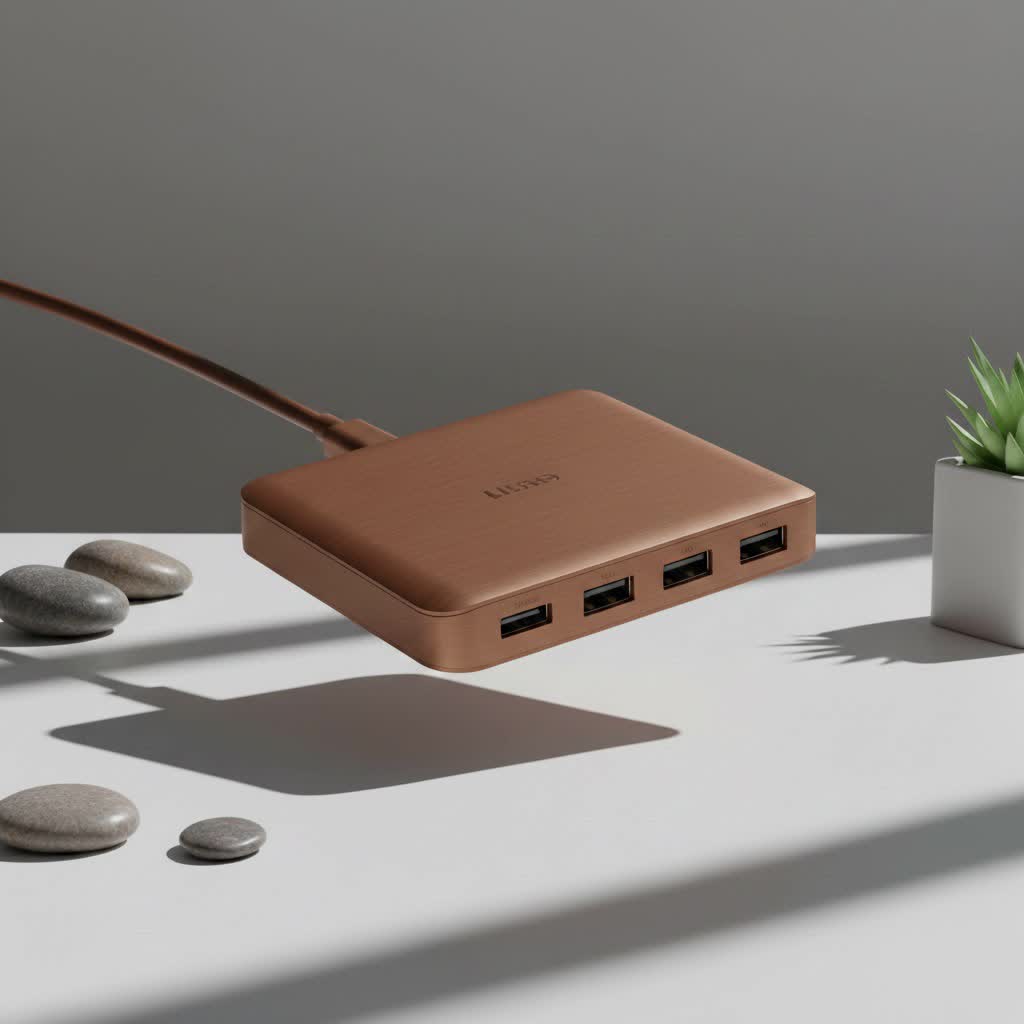
A powered USB 3.0 hub (or active hub), on the other hand, comes with its own external AC power adapter that plugs into a wall outlet. This means it provides its own dedicated power source to every connected device, ensuring each port receives the full, stable electricity it needs to function correctly. It doesn’t have to borrow power from your computer.
“Think of an unpowered hub like trying to share a single bottle of water among seven thirsty people. A powered hub gives every single person their own bottle. The result is better performance and reliability for everything you connect,” explains David Chen, our lead hardware analyst at Meeob.
The Key Benefits of a Powered USB 3.0 Hub
Upgrading to a powered hub isn’t just about adding more ports; it’s about adding more reliable ports that won’t let you down.
Unshakeable Stability for Your Devices
|
Our Picks for the Best USB Hub in 2026
As an Amazon Associate I earn from qualifying purchases.
|
||
| Num | Product | Action |
|---|---|---|
| 1 | UGREEN USB 3.0 Hub, 4 Ports USB A Splitter Ultra-Slim USB Expander for Mouse, Keyboard, Flash Drive, U Disk, Printer Compatible with Laptop, Desktop PC, Xbox, PS5, and More |

|
| 2 | USB C Docking Station with M.2 NVMe SSD Enclosure 10Gbps, 9 in 1 USB-C Hub, Type C SSD Slot with 4K@60Hz HDMI, USB 3.2 Gen2, PD100W, SD/TF Card Reader, Laptop Docking Station for Dell/HP/Lenovo/Mac |
|
| 3 | Anker Laptop Docking Station Dual Monitor, 8-in-1 USB C Hub, 4K Dual Monitor with 2 HDMI, 1 Gbps Ethernet Hub, 85W Power Delivery, SD Card Reader for MacBook Pro, XPS and More (Charger not Included) |
|
| 4 | 13 in 1 USB C Docking Station - Dual Monitor, Triple Display, 8 USB C/A Ports, Ethernet, Audio - LIONWEI USB C Hub for MacBook,Dell,HP,Lenovo,Surface |
|
| 5 | Powered USB Hub, Wenter 11-Port USB Splitter Hub (10 Faster Data Transfer Ports+ 1 Smart Charging Port) with Individual LED On/Off Switches, USB Hub 3.0 Powered with Power Adapter for Mac, PC |
|
| 6 | USB Hub 3.0, 7-Port USB Hub Splitter with Individual On/Off Switches and Lights, 3.2ft/1m Long Cable Compatible with MacBook, Laptop, Surface Pro, PS4, PC, Flash Drive, Mobile HDD |
|
| 7 | P9R PRO USB C Hub Ethernet, 10 in 1 USB Docking Station 10Gbps with 4K@60Hz HDMI, USB C and 2 USB A 3.2, LAN, 2 USB A 2.0, PD 100W, SD/TF Ports, USB to Ethernet Adapter for PC, iPhone 16/15, Mac |
|
| 8 | Powered USB Hub 10Gbps, intpw 9-Port USB 3.2 Hub, USB C Hub with USB A/USB C 3.2, 4 USB 3.0, 2 PD 45W Charging Ports, 65W Power Adapter and 3.3FT Cable, Aluminum USB Hub for Laptop, iPhone 17/16/15,PC |
|
| 9 | 3-in-1 USB C Splitter, 3 in 1 Type-C Charging Data Cable Data Transmission Decive Charging Adapter Power Charger Equipment for ome Office Use, Fast & Efficient |
|
| 10 | Anker USB Hub 4 Ports with 5Gbps Data Transfer, Multiple USB 3.0 Hub, USB Splitter for Laptop, Extender for A Port Laptop, PC, Desktop and More [Charging Not Supported](0.7 ft USB-A) |
|
The primary advantage is stable, consistent power. High-demand peripherals like external hard drives, SSDs, webcams, printers, and audio interfaces require a steady stream of electricity to work without interruption. A powered hub guarantees this, preventing random disconnects, data corruption, or device lag that often plagues unpowered setups. Your external drive won’t drop out in the middle of a critical file transfer.
Super-Speed Data Transfers, Guaranteed
The “3.0” in the name signifies a major speed boost. USB 3.0 (now often called USB 3.2 Gen 1) offers theoretical data transfer speeds of up to 5Gbps—ten times faster than its predecessor, USB 2.0. A powered hub ensures that there’s enough power to maintain these high speeds across all ports simultaneously. This means you can transfer large video files, back up your system, or access data from a fast SSD without creating a bottleneck.
A Convenient Charging Station
Because a powered hub has its own connection to a wall outlet, it can charge your devices even when your computer is asleep or turned off. Many modern powered hubs also feature dedicated charging ports that comply with Battery Charging (BC 1.2) standards, delivering more amperage to charge smartphones, tablets, and other gadgets more quickly than a standard computer port.
When Do You Absolutely Need a Powered Hub?
While an unpowered hub might suffice for a traveler connecting a mouse and a flash drive, there are many common scenarios where a powered USB 3.0 hub is not just a luxury, but a necessity.
You should opt for a powered hub if you:
- Use one or more external hard drives (HDDs) or solid-state drives (SSDs). These are notoriously power-hungry, especially mechanical spinning drives.
- Connect high-resolution webcams, scanners, or printers. These peripherals require consistent power to function without errors.
- Are a gamer with multiple accessories. Gaming keyboards, mice with RGB lighting, and high-fidelity headsets all draw a significant amount of power.
- Are a content creator. Musicians using audio interfaces and MIDI controllers or designers using drawing tablets need the reliability a powered hub provides.
- Want to charge multiple devices at once from your desk without using extra wall chargers.
- Find your current devices are randomly disconnecting. This is the most obvious sign that your peripherals aren’t getting enough power.
How to Choose the Right Powered USB 3.0 Hub
With so many options on the market, selecting the right hub can feel overwhelming. Focus on these key factors to make the best choice for your needs.
Number and Type of Ports
First, decide how many ports you need. It’s wise to choose a hub with one or two more ports than you currently need to allow for future expansion. Also, consider the mix of ports. Some hubs offer a combination of USB-A 3.0 ports, USB-C ports, and even dedicated charging-only ports.
Total Power Output
The power adapter is the heart of the hub. Look at its output, measured in Amps (A) and Volts (V). A higher amperage means more power is available to be shared among the ports. For a 7-port hub that will be heavily used, look for a power supply that delivers at least 4A to 5A to ensure every device gets what it needs.
Build Quality and Design
A hub with a metal (usually aluminum) casing will be more durable and better at dissipating heat than a cheap plastic one. Also, consider the form factor. Some are long and thin, designed to sit along the back of a desk, while others are compact and square. Pay attention to the length of the included power cord and USB cable to ensure they can reach your computer and a wall outlet comfortably.
Essential Extra Features
- Individual Port Switches: Some hubs have buttons for each port with LED indicators, allowing you to turn devices on or off without physically unplugging them.
- Port Spacing: If you use bulky USB devices like some flash drives or wireless dongles, look for a hub with ample space between ports.
- Surge Protection: Built-in protection can safeguard your connected devices from electrical surges.
Frequently Asked Questions (FAQ)
Can a powered USB hub damage my computer or devices?
No, a well-made powered hub is perfectly safe. USB ports are designed to only draw the power they need. The hub simply makes more power available; it doesn’t force it into your devices.
Is a USB 3.0 hub backward compatible with USB 2.0 devices?
Yes, absolutely. You can plug any USB 2.0 device into a USB 3.0 hub, and it will work perfectly, albeit at the slower USB 2.0 speed. Likewise, you can plug a USB 3.0 hub into a USB 2.0 port on your computer, but the entire hub will be limited to USB 2.0 speeds.
Do all ports on a powered hub provide the same amount of power?
Generally, yes, for data transfer. However, some hubs have one or two specially marked “charging ports” that can provide higher amperage (e.g., 2.4A) specifically for charging devices like tablets faster.
How much faster is USB 3.0 than USB 2.0?
In theory, USB 3.0 has a maximum speed of 5Gbps (Gigabits per second), while USB 2.0 maxes out at 480Mbps (Megabits per second). This makes USB 3.0 about 10 times faster, which is a dramatic difference when transferring large files.
Conclusion: Power Up Your Digital Life
In a world of ever-increasing peripherals, a powered USB 3.0 hub is no longer a niche accessory but a fundamental component of an efficient and reliable workstation. It solves the common problems of port shortages and unstable connections, ensuring all your devices—from power-hungry hard drives to simple mice—perform at their peak. By providing dedicated power and high-speed data transfer capabilities, it declutters your desk and streamlines your workflow. Investing in a quality powered hub is a small step that delivers a massive improvement in your daily computing experience.
