A USB C charging hub consolidates multiple device chargers into a single unit, providing centralized power distribution for laptops, phones, tablets, and smartwatches. These hubs leverage technologies like Power Delivery (PD) to deliver high-wattage output, typically ranging from 45W to over 240W, enabling fast and efficient charging for various gadgets simultaneously. Choosing the right hub involves assessing total power output, Power Delivery support, port configuration, and advanced features like GaN technology.
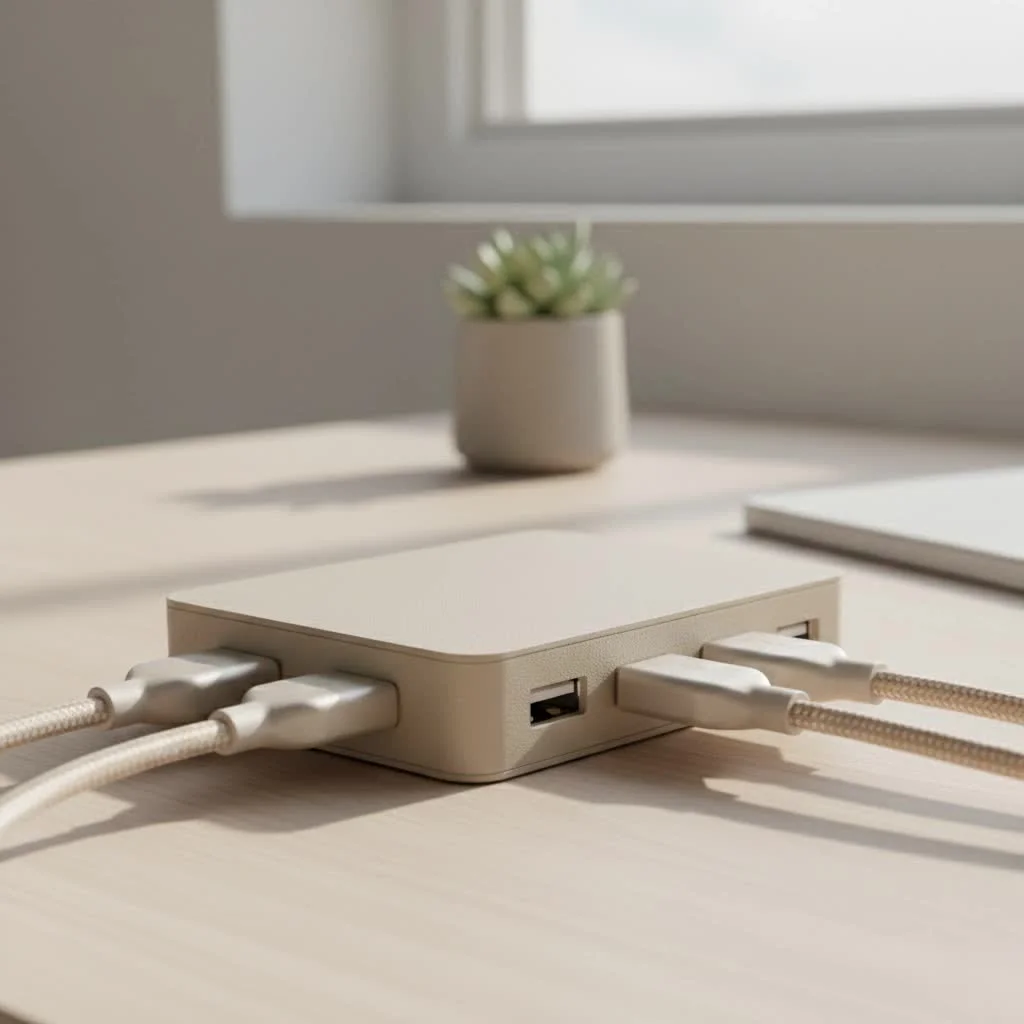
At Meeob, we’ve spent over a decade testing and analyzing every aspect of USB hubs. We understand that finding the right one isn’t just about adding more ports; it’s about getting the right power, in the right format, safely and efficiently. This guide will walk you through everything you need to know to select the perfect hub for your devices.
What is a USB C Charging Hub, Really?
First, let’s clear up a common point of confusion. A USB C charging hub is not the same as a simple USB-C data hub. While a data hub is designed primarily to connect peripherals like keyboards, mice, and external drives, a charging hub is a powerhouse built specifically to distribute high levels of electrical power to multiple devices simultaneously.
Think of it as a smart power strip for your gadgets. It takes a single AC outlet and transforms it into a centralized station with multiple USB-C and sometimes USB-A ports. The key is its focus on high-wattage output, leveraging technologies like Power Delivery (PD) to fast-charge everything from a power-hungry MacBook Pro to the latest smartphone.
Key Features to Look For in a USB C Charging Hub
Navigating the technical specifications can feel overwhelming. To simplify the process, we’ve broken down the most critical features to consider. Focus on these, and you’ll be well on your way to making an informed choice.
Total Power Output (Wattage)
The total wattage is the single most important specification. It represents the maximum amount of power the hub can deliver across all its ports at once. A hub might be advertised as “100W,” but how that power is distributed is crucial.
- Low Power (45W – 65W): Ideal for charging a smartphone, a tablet, and smaller accessories, or a single lightweight ultrabook like a MacBook Air.
- Mid-Range Power (100W – 140W): This is the sweet spot for most users. It can typically charge a powerful laptop (like a 14-inch MacBook Pro), a tablet, and a phone at full or near-full speed simultaneously.
- High Power (150W – 240W+): Designed for true power users. These hubs can handle multiple laptops, or a high-end 16-inch MacBook Pro, a tablet, a phone, and other accessories all at once without breaking a sweat.
As our lead hardware specialist, Alex Carter, puts it, “Always buy a hub with more wattage than you think you need today. Your next device will likely be more power-hungry, and a little overhead ensures you’re future-proofed and never left with a slow charge.”
Power Delivery (PD) and Smart Charging
|
Our Picks for the Best USB Hub in 2026
As an Amazon Associate I earn from qualifying purchases.
|
||
| Num | Product | Action |
|---|---|---|
| 1 | Anker Laptop Docking Station Dual Monitor, 8-in-1 USB C Hub, 4K Dual Monitor with 2 HDMI, 1 Gbps Ethernet Hub, 85W Power Delivery, SD Card Reader for MacBook Pro, XPS and More (Charger not Included) |

|
| 2 | Anker USB Hub 4 Ports with 5Gbps Data Transfer, Multiple USB 3.0 Hub, USB Splitter for Laptop, Extender for A Port Laptop, PC, Desktop and More [Charging Not Supported](0.7 ft USB-A) |
|
| 3 | P9R PRO USB C Hub Ethernet, 10 in 1 USB Docking Station 10Gbps with 4K@60Hz HDMI, USB C and 2 USB A 3.2, LAN, 2 USB A 2.0, PD 100W, SD/TF Ports, USB to Ethernet Adapter for PC, iPhone 16/15, Mac |
|
| 4 | 13 in 1 USB C Docking Station - Dual Monitor, Triple Display, 8 USB C/A Ports, Ethernet, Audio - LIONWEI USB C Hub for MacBook,Dell,HP,Lenovo,Surface |
|
| 5 | USB C Docking Station with M.2 NVMe SSD Enclosure 10Gbps, 9 in 1 USB-C Hub, Type C SSD Slot with 4K@60Hz HDMI, USB 3.2 Gen2, PD100W, SD/TF Card Reader, Laptop Docking Station for Dell/HP/Lenovo/Mac |
|
| 6 | Powered USB Hub 10Gbps, intpw 9-Port USB 3.2 Hub, USB C Hub with USB A/USB C 3.2, 4 USB 3.0, 2 PD 45W Charging Ports, 65W Power Adapter and 3.3FT Cable, Aluminum USB Hub for Laptop, iPhone 17/16/15,PC |
|
| 7 | Powered USB Hub, Wenter 11-Port USB Splitter Hub (10 Faster Data Transfer Ports+ 1 Smart Charging Port) with Individual LED On/Off Switches, USB Hub 3.0 Powered with Power Adapter for Mac, PC |
|
| 8 | UGREEN USB 3.0 Hub, 4 Ports USB A Splitter Ultra-Slim USB Expander for Mouse, Keyboard, Flash Drive, U Disk, Printer Compatible with Laptop, Desktop PC, Xbox, PS5, and More |
|
| 9 | 3-in-1 USB C Splitter, 3 in 1 Type-C Charging Data Cable Data Transmission Decive Charging Adapter Power Charger Equipment for ome Office Use, Fast & Efficient |
|
| 10 | USB Hub 3.0, 7-Port USB Hub Splitter with Individual On/Off Switches and Lights, 3.2ft/1m Long Cable Compatible with MacBook, Laptop, Surface Pro, PS4, PC, Flash Drive, Mobile HDD |
|
Power Delivery (PD) is a charging standard that allows a USB-C connection to deliver significantly more power than a standard USB port. It’s a “smart” protocol, meaning your device and the charging hub communicate to determine the optimal voltage and current for the fastest, safest charge.
When looking for a charging hub USB C, ensure it explicitly states support for “USB-C PD 3.0” or even “PD 3.1” for the latest devices. This guarantees compatibility and maximum charging speeds for your laptops, tablets, and phones.
The Right Mix: Number and Type of Ports
More ports aren’t always better if they don’t fit your needs. Analyze the devices you charge daily.
- Multiple High-Wattage USB-C Ports: A good hub should have at least two high-power USB-C PD ports. This allows you to charge a laptop and another significant device (like a tablet or a second laptop) at the same time without compromising speed.
- USB-A Ports: Don’t discount the older standard just yet. USB-A ports are still incredibly useful for charging legacy devices, smartwatches, wireless headphones, and other accessories that don’t require high wattage.
- Port Layout: Consider the physical spacing of the ports. If they are too close together, you may struggle to plug in bulky cables or adapters.
The GaN Technology Advantage
You’ll often see the term “GaN” mentioned with premium charging hubs. GaN stands for Gallium Nitride, a semiconductor material that is far more efficient than the traditional silicon used in older chargers.
What does this mean for you?
- Smaller Size: GaN chargers can be significantly smaller and lighter than their silicon-based counterparts with the same power output.
- Less Heat: Higher efficiency means less energy is wasted as heat. This makes GaN hubs safer and more durable.
- More Power: GaN technology enables manufacturers to pack more power into a compact form factor.
While slightly more expensive, a GaN-based charging hub USB C is almost always a worthwhile investment for its efficiency and portability.
How to Choose the Right Hub for Your Lifestyle
With the technical specs covered, let’s connect them to real-world scenarios.
For the Desk Warrior
If you work from home or in an office, your goal is to create a clean, efficient workspace.
- Look for: A high-wattage hub (100W+) with at least 4-6 ports.
- Prioritize: Multiple USB-C PD ports to power your main laptop and a secondary device, plus USB-A ports for peripherals.
- Example Setup: A 140W hub charging a laptop via a 100W USB-C port, a tablet via a 30W USB-C port, and a phone and headphones via two USB-A ports.
For the Frequent Traveler
For those constantly on the go, size and weight are paramount.
- Look for: A compact, GaN-based hub with 65W to 100W of power.
- Prioritize: A slim design with foldable prongs and just enough ports for your essential travel tech (laptop, phone, power bank).
- Example Setup: A 65W GaN hub that can power a MacBook Air, an iPhone, and a watch, all while taking up minimal space in your bag.
For the Family Charging Station
If you need a central spot to charge everyone’s devices, durability and port variety are key.
- Look for: A sturdy desktop-style hub with a good mix of USB-C and USB-A ports.
- Prioritize: Smart power distribution that can allocate power evenly, and safety features to protect all connected devices.
- Example Setup: A 150W hub in the living room where family members can plug in iPads, Android phones, Nintendo Switches, and more.
Frequently Asked Questions (FAQ)
Can any USB-C charging hub charge my laptop?
No, not all USB-C charging hubs can charge every laptop. You must ensure the hub has a USB-C PD port that provides sufficient wattage for your specific laptop model. For instance, a 13-inch ultrabook might need 45-65W, while a 16-inch performance laptop could require 100W or more.
Is it safe to leave my devices plugged into a hub overnight?
Yes, it is generally safe to leave devices plugged into a quality charging hub overnight. Modern devices and certified hubs incorporate built-in protection against overcharging, overheating, and short-circuiting. Once a device’s battery is full, the hub will automatically cease power delivery to prevent damage.
What is the difference between a charging hub and a power strip?
A power strip primarily offers multiple AC outlets for plugging in various devices. In contrast, a charging hub converts AC power to DC power and intelligently distributes it via USB ports, often providing faster and more efficient charging specifically for USB-powered gadgets compared to standard power bricks.
Do all USB-C ports on a hub deliver the same amount of power?
No, typically not all USB-C ports on a hub deliver the same amount of power. Most hubs feature one or two designated high-power ports for demanding devices like laptops, while other ports offer lower wattage suitable for phones and accessories. Manufacturers usually label the maximum wattage for each port.
Why is my device charging slowly from the hub?
Slow charging from a hub can occur for several reasons. You might be using a port with lower wattage output, or the hub’s total power limit could be exceeded if too many power-hungry devices are connected simultaneously. Using a low-quality USB-C cable not rated for the required power can also impede charging speed.
Power Up Your World, Simply
Choosing the right charging hub USB C is about more than just convenience; it’s about investing in an efficient, organized, and safe way to power your digital life. By understanding the core concepts of total wattage, Power Delivery, and port configuration, you can confidently select a hub that will serve you well for years to come. Say goodbye to cable clutter and the frantic search for a free outlet. A single, powerful hub is all you need to stay charged and ready for whatever comes next.
Frequently Asked Questions
Can any USB-C charging hub charge my laptop?
No, not all USB-C charging hubs can charge every laptop. You must ensure the hub has a USB-C PD port that provides sufficient wattage for your specific laptop model. For instance, a 13-inch ultrabook might need 45-65W, while a 16-inch performance laptop could require 100W or more.
Is it safe to leave my devices plugged into a hub overnight?
Yes, it is generally safe to leave devices plugged into a quality charging hub overnight. Modern devices and certified hubs incorporate built-in protection against overcharging, overheating, and short-circuiting. Once a device's battery is full, the hub will automatically cease power delivery to prevent damage.
What is the difference between a charging hub and a power strip?
A power strip primarily offers multiple AC outlets for plugging in various devices. In contrast, a charging hub converts AC power to DC power and intelligently distributes it via USB ports, often providing faster and more efficient charging specifically for USB-powered gadgets compared to standard power bricks.
Do all USB-C ports on a hub deliver the same amount of power?
No, typically not all USB-C ports on a hub deliver the same amount of power. Most hubs feature one or two designated high-power ports for demanding devices like laptops, while other ports offer lower wattage suitable for phones and accessories. Manufacturers usually label the maximum wattage for each port.
Why is my device charging slowly from the hub?
Slow charging from a hub can occur for several reasons. You might be using a port with lower wattage output, or the hub's total power limit could be exceeded if too many power-hungry devices are connected simultaneously. Additionally, using a low-quality USB-C cable not rated for the required power can also impede charging speed.
Choose the Right USB C Charging Hub
Selecting the ideal USB C charging hub involves evaluating its power output, Power Delivery capabilities, and port configuration to match your specific devices and lifestyle.
Determine the combined wattage needed for all devices you plan to charge simultaneously. Look for hubs with 100W-140W for most users, or 150W-240W+ for power users with multiple laptops. This ensures adequate power distribution without slow charging.
Ensure the hub explicitly supports USB-C PD 3.0 or PD 3.1 for optimal charging speeds and compatibility with modern laptops, tablets, and phones. PD allows devices and the hub to communicate for safe and efficient power delivery.
Identify the number of high-wattage USB-C PD ports required for your primary devices (e.g., laptop, tablet). Also, consider the necessity of USB-A ports for legacy devices, smartwatches, or headphones. A good mix ensures versatility.
Opt for a GaN (Gallium Nitride) based hub if portability and efficiency are priorities. GaN technology allows for smaller, lighter chargers that generate less heat and can pack more power into a compact form factor, making them ideal for travelers.
Choose a hub based on your usage scenario: a 100W+ multi-port hub for a desk warrior, a compact 65W-100W GaN hub for travelers, or a sturdy 150W desktop hub with varied ports for a family charging station. This ensures the hub meets your specific needs.
Get our weekly buyer guide
Practical specs, not advice. Unsubscribe anytime.
This charging hub has simplified my travel bag so much. I used to carry three different bricks, but now I just bring this one unit. The port configuration is perfect for my needs, allowing me to charge my phone, portable monitor, and even my drone batteries. It’s robust and feels well-made, and I haven’t had any connectivity issues at all. Highly recommend for anyone on the go.
I finally upgraded to a charging hub with GaN technology, and it’s a game-changer! My old hub was bulky and always got warm, but this new one is so compact and stays cool even when charging my laptop, phone, and tablet all at once. The fast charging is no joke; everything powers up super quick. Definitely worth the investment for anyone with multiple USB-C devices.
This hub has been great for decluttering my desk. I was tired of having separate chargers for my MacBook Pro and my iPad, plus my smartwatch. The Power Delivery support is excellent, and I can confirm it delivers the high wattage needed for my laptop without any issues. My only minor gripe is that I wish it had one more USB-A port, but that’s just a personal preference.
I bought a 60W charging hub, thinking it would be enough for my setup. While it charges my phone and earbuds perfectly, it struggles a bit when I try to charge my work laptop and tablet simultaneously. It’s fine if I only need to power one high-demand device, but for multiple, I probably should have gone for one with a higher total power output. It’s decent, but just be mindful of your specific wattage needs.