Are you tired of your Wi-Fi dropping during a critical video call or lagging in the middle of an intense online game? In a world of sleek, ultra-thin laptops, the casualty has often been the humble Ethernet port, leaving us at the mercy of wireless signals. This is where the Ethernet Usb Hub comes in, not just as a simple accessory, but as an essential tool for anyone who craves a stable, high-speed internet connection while also needing to connect multiple devices. It’s the ultimate two-in-one solution for the modern digital workspace.
What is an Ethernet USB Hub, Really?
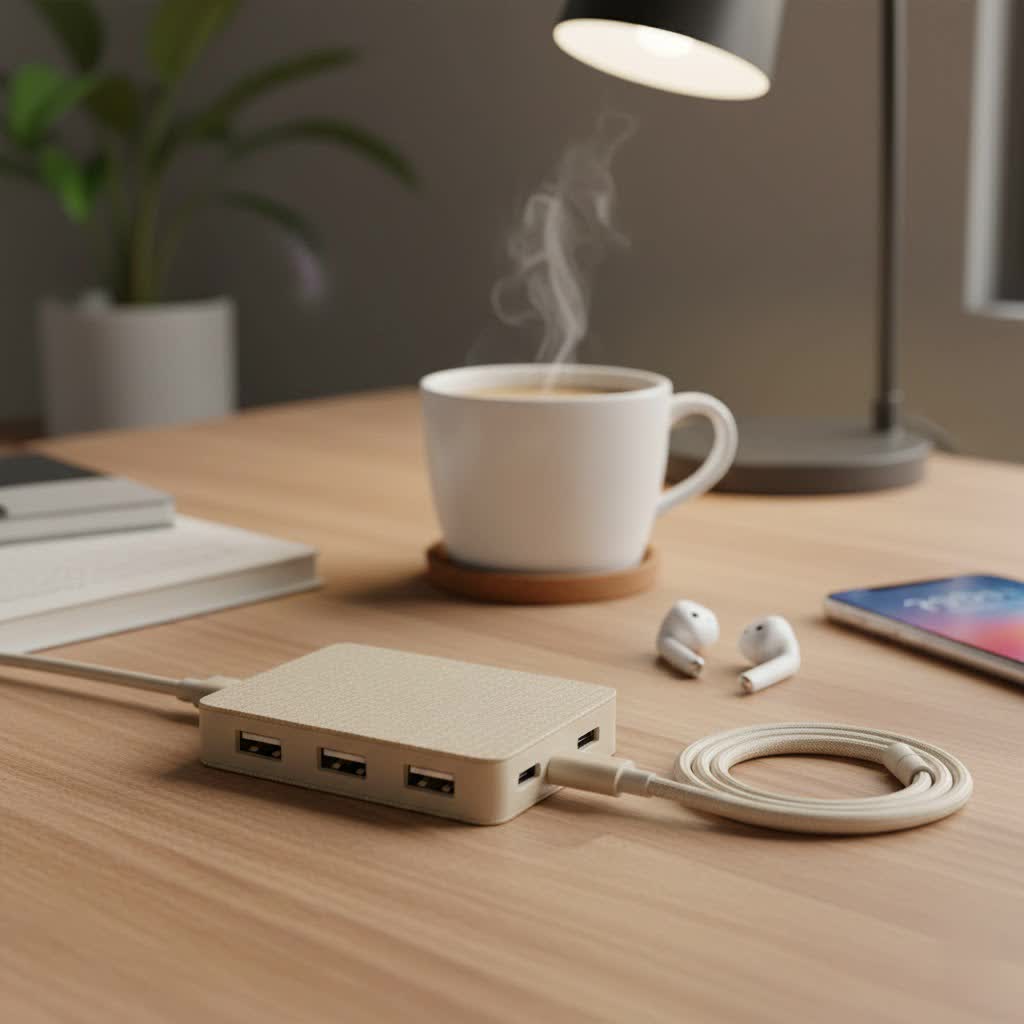
Think of an ethernet USB hub as a multi-tool for your computer. At its core, it performs two critical functions. First, it acts as a standard USB hub, expanding a single USB port (like USB-C or USB-A) on your laptop into several, allowing you to connect your mouse, keyboard, external hard drive, and other peripherals simultaneously. Second, and most importantly, it includes a dedicated RJ45 Ethernet port. This allows you to connect your device directly to a modem or router with a network cable, giving you a hardwired internet connection that Wi-Fi often can’t match for reliability.
Why You Need a Hub with a Wired Connection
In an era dominated by wireless technology, you might wonder if a wired connection is still relevant. For users who demand peak performance, the answer is a resounding yes. A hub that combines USB expansion with a network port offers tangible benefits that directly impact your productivity and leisure.
The Unbeatable Stability of a Wired Connection
|
Our Picks for the Best USB Hub in 2026
As an Amazon Associate I earn from qualifying purchases.
|
||
| Num | Product | Action |
|---|---|---|
| 1 | Powered USB Hub, Wenter 11-Port USB Splitter Hub (10 Faster Data Transfer Ports+ 1 Smart Charging Port) with Individual LED On/Off Switches, USB Hub 3.0 Powered with Power Adapter for Mac, PC |

|
| 2 | 3-in-1 USB C Splitter, 3 in 1 Type-C Charging Data Cable Data Transmission Decive Charging Adapter Power Charger Equipment for ome Office Use, Fast & Efficient |
|
| 3 | 13 in 1 USB C Docking Station - Dual Monitor, Triple Display, 8 USB C/A Ports, Ethernet, Audio - LIONWEI USB C Hub for MacBook,Dell,HP,Lenovo,Surface |
|
| 4 | Anker USB Hub 4 Ports with 5Gbps Data Transfer, Multiple USB 3.0 Hub, USB Splitter for Laptop, Extender for A Port Laptop, PC, Desktop and More [Charging Not Supported](0.7 ft USB-A) |
|
| 5 | Powered USB Hub 10Gbps, intpw 9-Port USB 3.2 Hub, USB C Hub with USB A/USB C 3.2, 4 USB 3.0, 2 PD 45W Charging Ports, 65W Power Adapter and 3.3FT Cable, Aluminum USB Hub for Laptop, iPhone 17/16/15,PC |
|
| 6 | USB C Docking Station with M.2 NVMe SSD Enclosure 10Gbps, 9 in 1 USB-C Hub, Type C SSD Slot with 4K@60Hz HDMI, USB 3.2 Gen2, PD100W, SD/TF Card Reader, Laptop Docking Station for Dell/HP/Lenovo/Mac |
|
| 7 | UGREEN USB 3.0 Hub, 4 Ports USB A Splitter Ultra-Slim USB Expander for Mouse, Keyboard, Flash Drive, U Disk, Printer Compatible with Laptop, Desktop PC, Xbox, PS5, and More |
|
| 8 | Anker Laptop Docking Station Dual Monitor, 8-in-1 USB C Hub, 4K Dual Monitor with 2 HDMI, 1 Gbps Ethernet Hub, 85W Power Delivery, SD Card Reader for MacBook Pro, XPS and More (Charger not Included) |
|
| 9 | USB Hub 3.0, 7-Port USB Hub Splitter with Individual On/Off Switches and Lights, 3.2ft/1m Long Cable Compatible with MacBook, Laptop, Surface Pro, PS4, PC, Flash Drive, Mobile HDD |
|
| 10 | P9R PRO USB C Hub Ethernet, 10 in 1 USB Docking Station 10Gbps with 4K@60Hz HDMI, USB C and 2 USB A 3.2, LAN, 2 USB A 2.0, PD 100W, SD/TF Ports, USB to Ethernet Adapter for PC, iPhone 16/15, Mac |
|
Wi-Fi is convenient, but it’s susceptible to interference from other networks, physical barriers like walls, and even your microwave. This can lead to frustrating signal drops and inconsistent performance. A wired connection via an ethernet USB hub eliminates these variables entirely.
“A direct, wired connection is like a private, dedicated highway for your data, bypassing the traffic jams and interference of the shared Wi-Fi airwaves,” explains David Chen, our lead hardware analyst at Meeob. “For tasks where every millisecond counts, like competitive gaming or high-frequency trading, it’s non-negotiable.”
Supercharge Your Internet Speeds
Is a USB to Ethernet connection slower than a dedicated port? For most users, the difference is negligible. Modern USB standards like USB 3.0 and USB-C offer more than enough bandwidth to handle even Gigabit internet speeds (1,000 Mbps). In many cases, a wired connection through a quality hub will be significantly faster and have lower latency (ping) than your typical Wi-Fi connection, leading to faster downloads, smoother 4K streaming, and a more responsive online experience.
Solving the “No More Ports” Dilemma
Apple’s MacBooks, Dell’s XPS line, and countless other ultrabooks have embraced minimalism, often leaving users with only one or two USB-C ports. This creates a constant juggling act. Do you unplug your hard drive to connect a monitor? An ethernet USB hub instantly resolves this, turning that single port into a powerhouse workstation. You can have your wired internet, external monitor, mouse, and charge your laptop all at the same time.
How to Choose the Perfect Ethernet USB Hub
Not all hubs are created equal. Selecting the right one depends on your specific devices and how you plan to use them. Focusing on these key features will ensure you get a device that meets your needs now and in the future.
Connection Type: USB-C vs. USB-A
The first step is to look at the ports on your computer.
- USB-C Hubs: These are the modern standard, found on nearly all new laptops (MacBooks, Windows Ultrabooks), tablets (iPad Pro), and even some smartphones. They are small, reversible, and support high speeds and features like Power Delivery.
- USB-A Hubs: This is the traditional rectangular USB port. While still common on desktops and older laptops, it’s being phased out. If your device only has USB-A ports, this is the type you’ll need.
Ethernet Port Speed: Don’t Get Bottlenecked
The speed of the Ethernet port on the hub is crucial.
- Fast Ethernet (100 Mbps): This is an older standard. It’s fine for basic browsing but will bottleneck internet plans faster than 100 Mbps. Avoid this unless your needs are very light.
- Gigabit Ethernet (1 Gbps or 1,000 Mbps): This is the gold standard for most users. It can handle the majority of home and office internet plans, ensuring you get the full speed you’re paying for.
- Multi-Gig Ethernet (2.5 Gbps or higher): This is for power users, content creators, or anyone with an ultra-fast internet connection. It provides a significant speed boost but requires a compatible router and internet plan to see the benefit.
Added Features to Consider
Many hubs offer more than just USB and Ethernet ports. Look for these extras to maximize functionality:
- Power Delivery (PD): A USB-C hub with PD has an extra USB-C port that allows you to plug in your laptop’s charger. This “pass-through” charging lets you power your laptop while using the hub’s other ports. It’s a must-have feature for single-port devices.
- HDMI/DisplayPort: Need to connect an external monitor? A hub with a 4K HDMI or DisplayPort output can replace a separate video adapter.
- SD/MicroSD Card Readers: A huge convenience for photographers and videographers, allowing for direct transfer of files without a separate card reader.
Frequently Asked Questions (FAQ)
Is a USB hub with Ethernet as good as a dedicated port?
Yes, for the vast majority of users, a high-quality ethernet USB hub using USB 3.0 or USB-C will provide the same Gigabit speeds and low latency as a built-in Ethernet port. The underlying technology is robust and designed for high-throughput data.
Does a USB to Ethernet adapter slow down internet?
No, a well-made adapter does not inherently slow down your internet. The limiting factor is more likely to be your internet plan, your router, or the USB standard you are using. A USB 3.0 port provides up to 5 Gbps of bandwidth, far more than the 1 Gbps needed for a standard Gigabit Ethernet connection.
Do I need to install drivers for my Ethernet USB hub?
Most modern hubs are “plug-and-play.” Operating systems like Windows 10/11 and macOS have built-in drivers that recognize the hub automatically. However, some advanced or older models may require a one-time driver installation, which is usually a quick and easy process.
Can I use an Ethernet USB hub with a gaming console like a Nintendo Switch?
Yes, many USB-A Ethernet adapters and hubs are compatible with gaming consoles like the Nintendo Switch, providing a more stable connection for online gaming than the console’s built-in Wi-Fi. Always check the hub’s compatibility list before purchasing.
The Final Verdict
The ethernet USB hub is far more than a simple accessory; it’s a powerful upgrade for any modern computer user. It solves the dual problems of limited connectivity and unreliable Wi-Fi in one compact device. By restoring the stability of a wired connection and expanding your ability to connect essential peripherals, it empowers you to work more efficiently, stream more smoothly, and game more competitively. When choosing your next tech accessory, don’t overlook this versatile and indispensable tool.
