Running out of USB ports is a modern-day frustration we’ve all faced. You have a mouse, a keyboard, an external hard drive, a webcam, and a smartphone to charge, but your sleek laptop only offers one or two ports. It feels like trying to fit a week’s worth of groceries into a mini-fridge. This is where A Usb Hub becomes an essential accessory, acting as a simple yet powerful solution to expand your device’s connectivity instantly. It’s the digital equivalent of a power strip, turning a single USB port into a gateway for all your peripherals.
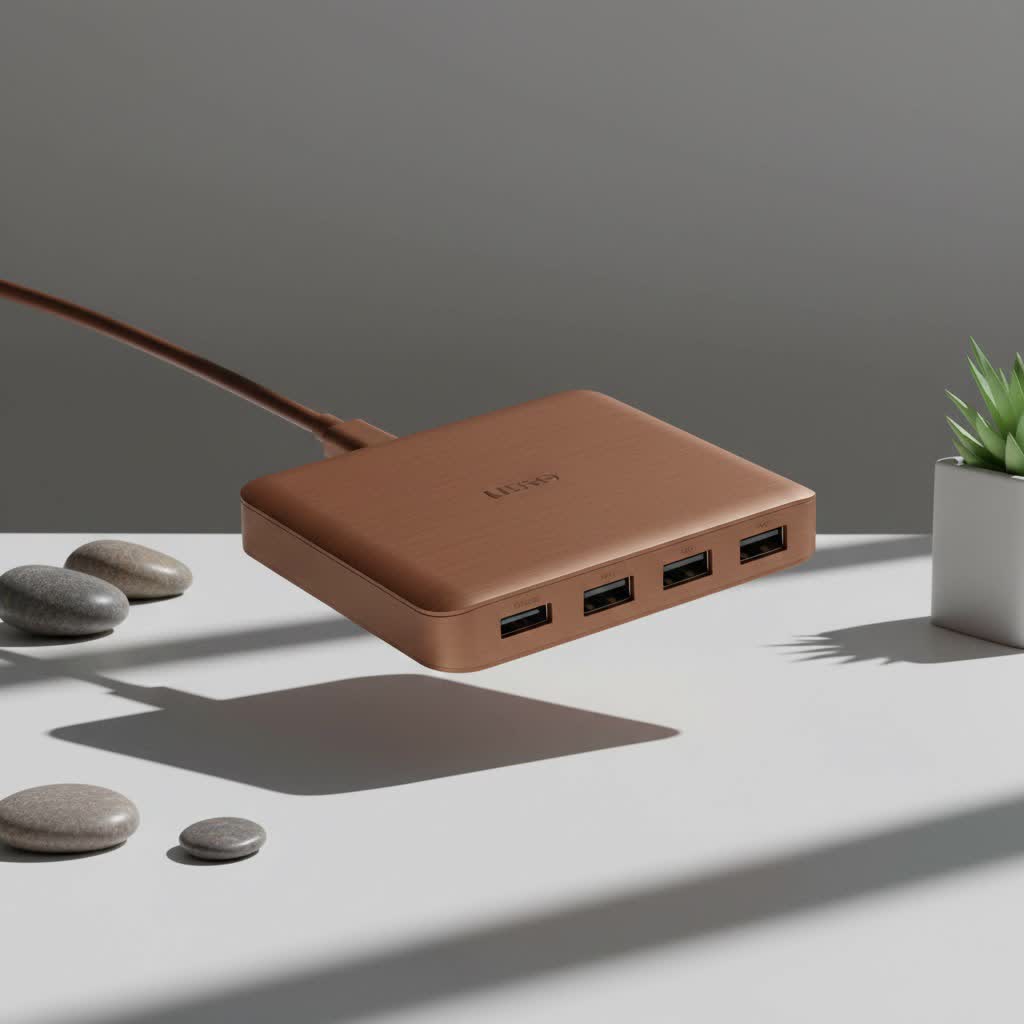
What Exactly Is a USB Hub?
At its core, a USB hub is a device that expands a single Universal Serial Bus (USB) port into several, allowing you to connect more devices to your computer, laptop, or tablet than its built-in ports allow. Think of it as a splitter. You plug the hub into one of your computer’s USB ports, and suddenly you have three, four, seven, or even more ports available for all your gadgets. It’s a plug-and-play solution that centralizes your connections, reduces cable clutter, and makes your digital life significantly more convenient.
The Different Types of USB Hubs Explained
Not all USB hubs are created equal. They vary in power source, speed, and functionality. Understanding these differences is key to finding the perfect hub for your needs.
Powered vs. Non-Powered (Bus-Powered) Hubs
One of the most critical distinctions is how a hub gets its power.
-
Non-Powered (Bus-Powered) Hubs: These are the simplest type. They draw power directly from the host computer through the USB port they are plugged into. They are highly portable and great for connecting low-power devices like a mouse, keyboard, or flash drive. However, the power they provide is limited and shared among all connected devices. If you connect too many power-hungry gadgets, like external hard drives or webcams, you might experience performance issues or connection drops.
-
Powered (Self-Powered) Hubs: These hubs come with their own external AC adapter that plugs into a wall outlet. This provides dedicated power to the hub and each of its ports. A powered USB hub is the best choice for connecting high-drain devices. It ensures that every peripheral gets a stable and sufficient power supply, preventing data transfer errors and ensuring reliable performance for devices like printers, scanners, and external hard drives.
|
Our Picks for the Best USB Hub in 2026
As an Amazon Associate I earn from qualifying purchases.
|
||
| Num | Product | Action |
|---|---|---|
| 1 | USB Hub 3.0, 7-Port USB Hub Splitter with Individual On/Off Switches and Lights, 3.2ft/1m Long Cable Compatible with MacBook, Laptop, Surface Pro, PS4, PC, Flash Drive, Mobile HDD |

|
| 2 | Powered USB Hub 10Gbps, intpw 9-Port USB 3.2 Hub, USB C Hub with USB A/USB C 3.2, 4 USB 3.0, 2 PD 45W Charging Ports, 65W Power Adapter and 3.3FT Cable, Aluminum USB Hub for Laptop, iPhone 17/16/15,PC |
|
| 3 | 3-in-1 USB C Splitter, 3 in 1 Type-C Charging Data Cable Data Transmission Decive Charging Adapter Power Charger Equipment for ome Office Use, Fast & Efficient |
|
| 4 | Powered USB Hub, Wenter 11-Port USB Splitter Hub (10 Faster Data Transfer Ports+ 1 Smart Charging Port) with Individual LED On/Off Switches, USB Hub 3.0 Powered with Power Adapter for Mac, PC |
|
| 5 | 13 in 1 USB C Docking Station - Dual Monitor, Triple Display, 8 USB C/A Ports, Ethernet, Audio - LIONWEI USB C Hub for MacBook,Dell,HP,Lenovo,Surface |
|
| 6 | P9R PRO USB C Hub Ethernet, 10 in 1 USB Docking Station 10Gbps with 4K@60Hz HDMI, USB C and 2 USB A 3.2, LAN, 2 USB A 2.0, PD 100W, SD/TF Ports, USB to Ethernet Adapter for PC, iPhone 16/15, Mac |
|
| 7 | USB C Docking Station with M.2 NVMe SSD Enclosure 10Gbps, 9 in 1 USB-C Hub, Type C SSD Slot with 4K@60Hz HDMI, USB 3.2 Gen2, PD100W, SD/TF Card Reader, Laptop Docking Station for Dell/HP/Lenovo/Mac |
|
| 8 | Anker USB Hub 4 Ports with 5Gbps Data Transfer, Multiple USB 3.0 Hub, USB Splitter for Laptop, Extender for A Port Laptop, PC, Desktop and More [Charging Not Supported](0.7 ft USB-A) |
|
| 9 | UGREEN USB 3.0 Hub, 4 Ports USB A Splitter Ultra-Slim USB Expander for Mouse, Keyboard, Flash Drive, U Disk, Printer Compatible with Laptop, Desktop PC, Xbox, PS5, and More |
|
| 10 | Anker Laptop Docking Station Dual Monitor, 8-in-1 USB C Hub, 4K Dual Monitor with 2 HDMI, 1 Gbps Ethernet Hub, 85W Power Delivery, SD Card Reader for MacBook Pro, XPS and More (Charger not Included) |
|
“Many users underestimate the importance of stable power delivery,” notes tech expert Adrian Miles. “A powered USB hub isn’t just about connecting more devices; it’s about ensuring each one performs reliably without taxing your computer’s resources.”
USB Standards: From USB 2.0 to USB-C
The USB standard determines the data transfer speed. Using the right one is crucial for efficiency.
- USB 2.0: This is an older standard with a maximum data transfer speed of 480 Megabits per second (Mbps). It’s sufficient for basic peripherals like keyboards and mice, but it will be a significant bottleneck for transferring large files.
- USB 3.0 (and its successors): Now often referred to as USB 3.2 Gen 1, this standard offers speeds up to 5 Gigabits per second (Gbps)—over ten times faster than USB 2.0. This is ideal for external hard drives, SSDs, and high-resolution webcams. You can usually identify these ports by their blue color.
- USB-C Hubs: USB-C is a newer, oval-shaped connector type, not a speed standard itself. A USB-C hub can support various protocols, including USB 3.1, USB 3.2, Thunderbolt 3, and Thunderbolt 4, offering blazing-fast speeds up to 40 Gbps. These hubs are often multi-functional, including ports for HDMI, Ethernet, and SD card readers.
Multi-Function Hubs and Docking Stations
For users who need maximum functionality, especially with modern laptops that only feature USB-C ports, a multi-function hub is a lifesaver. These are often called multiport adapters or mini docking stations. Beyond just adding more USB ports, they can include:
- HDMI or DisplayPort: For connecting external monitors.
- Ethernet Port: For a stable, wired internet connection.
- SD and microSD Card Readers: For easy photo and video transfers.
- Audio Jack: For connecting headphones or speakers.
While a USB hub primarily expands your USB ports, a docking station is a more robust solution designed to turn a laptop into a full-fledged desktop setup with a single connection.
How to Choose the Right USB Hub for You
Selecting the right USB hub depends entirely on your specific use case. Here’s a simple checklist to guide your decision:
- Count Your Devices: How many peripherals do you need to connect simultaneously? Choose a hub with at least one or two more ports than you currently need to future-proof your setup.
- Assess Power Needs: Are you connecting simple devices like a mouse and keyboard, or power-hungry ones like an external SSD and a webcam? For the latter, a powered USB hub is non-negotiable.
- Check Your Ports: What kind of port does your computer have? If you have a newer laptop, you’ll likely need a USB-C hub. For older desktops, a hub that connects via the traditional USB-A port will work.
- Consider Speed: If you frequently transfer large files, invest in a USB 3.0 or higher hub. The time you save will be well worth the small extra cost. For basic connectivity, USB 2.0 is fine.
- Think About Portability: If you’re always on the go, a compact, bus-powered hub is easy to toss in your laptop bag. For a permanent desk setup, a larger, powered hub is more practical.
Frequently Asked Questions (FAQ)
Does a USB hub slow down data transfer?
A USB hub shares the bandwidth of the single port it’s connected to. For low-demand devices, you won’t notice a difference. However, if you’re using multiple high-speed devices like external SSDs simultaneously on a single hub, you may see a slight reduction in speed as they compete for bandwidth.
Can I charge my phone through a USB hub?
Yes, but the charging speed will vary. A non-powered hub will charge a device very slowly. A powered hub with dedicated charging ports (often marked with a battery symbol) can charge devices much faster, sometimes as quickly as a wall adapter.
Do all USB hubs work with all computers?
Generally, yes. USB is a universal standard, and hubs are designed to be plug-and-play with Windows, macOS, and Linux systems without needing special drivers. The key is matching the hub’s connector (USB-A or USB-C) to the port on your computer.
What’s the difference between a USB hub and a docking station?
A USB hub’s main purpose is to add more USB ports. A docking station is a more comprehensive solution that adds a wide variety of ports (USB, video, Ethernet, audio) and is designed to connect all your desktop peripherals to a laptop with a single cable.
How many USB hubs can I connect together?
You can daisy-chain USB hubs, but it’s not always recommended. The USB specification allows for connecting up to 127 devices, but with each layer of hubs, you introduce potential latency and power distribution issues. For best performance, it’s better to connect your hub directly to the computer.
Your Gateway to More Connectivity
In a world where our devices are getting smaller and their ports are disappearing, a USB hub is no longer just a convenience—it’s a necessity. By understanding the key differences between powered and non-powered models and choosing the right standard for your speed requirements, you can easily expand your connectivity. Whether you’re decluttering your desk, building a workstation for your laptop, or simply need an extra port on the go, there is a USB hub out there to solve your problem. Choose wisely, and you’ll unlock the full potential of your devices.
