A computer USB hub is an essential tool that expands a single USB port into multiple connection possibilities, addressing the common problem of limited ports on modern devices. The right hub depends on your specific needs, including the types of devices you connect, their power requirements, and desired data transfer speeds. For instance, a powered USB 3.0 hub is ideal for connecting multiple high-power devices like external hard drives, ensuring stable power and fast data transfer up to 5 Gbps.
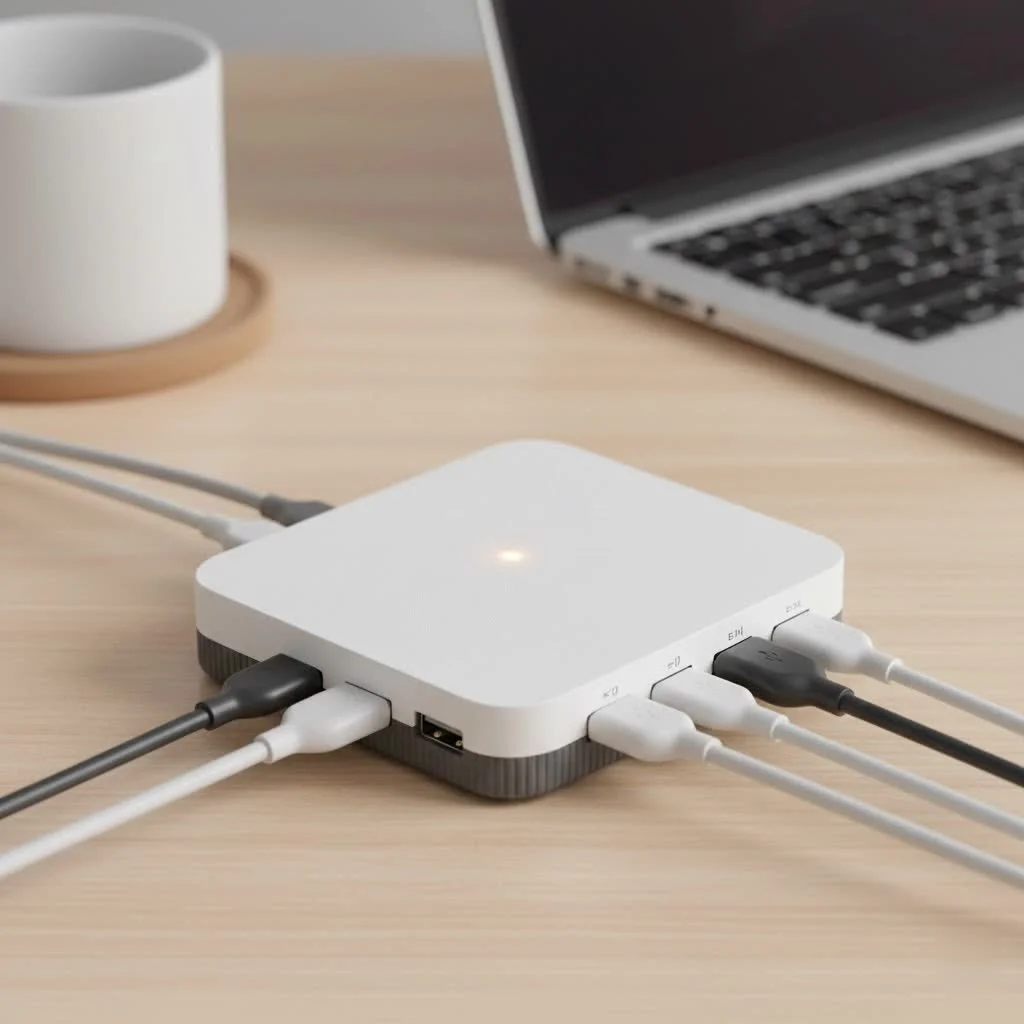
With a vast sea of options on the market, how do you choose the right one? This guide, backed by over a decade of hands-on experience at Meeob, will demystify the world of USB hubs. We’ll break down the technical jargon into plain English, helping you select the perfect hub to streamline your workflow and supercharge your connectivity. For complete usb hubs library on this site.
The Different Types of Computer USB Hubs Explained
Before you can pick the best computer USB hub, it’s crucial to understand the main categories they fall into. Your choice will primarily depend on the types of devices you plan to connect and how you intend to use them.
Powered vs. Unpowered Hubs: A Critical Distinction
The first major decision is whether you need a powered or unpowered hub. This choice directly impacts what kind of devices you can reliably connect.
- Unpowered (Bus-Powered) Hubs: These are the simplest type. They draw power directly from the computer they’re plugged into. This makes them highly portable and convenient, as you don’t need an extra power adapter. However, the power they provide is limited and shared among all connected devices. They are perfect for low-power peripherals like a mouse, keyboard, or a standard flash drive.
- Powered (Self-Powered) Hubs: These hubs come with their own external AC adapter that plugs into a wall outlet. This dedicated power source allows them to support multiple high-power devices simultaneously without issue. If you plan on connecting devices like external hard drives, webcams, printers, or want to charge your phone, a powered hub is non-negotiable. It ensures each device gets enough stable power to function correctly.
“Think of it like this,” explains tech analyst David Chen. “An unpowered hub is like a power strip plugged into another power strip—the total power is limited. A powered hub is like a brand new wall outlet, providing fresh, stable power for all your demanding gadgets.”
Understanding USB Standards: From USB 2.0 to USB-C
The version of the USB standard a hub supports dictates its data transfer speed. Using a hub with an older standard can create a significant bottleneck, slowing down your devices.
- USB 2.0: An older standard with a maximum speed of 480 Mbps. While sufficient for keyboards and mice, it’s painfully slow for transferring large files. It’s best to avoid these unless your needs are extremely basic.
- USB 3.0 (and its successors): Now often referred to as USB 3.2 Gen 1, this standard offers speeds up to 5 Gbps—over ten times faster than USB 2.0. This is the sweet spot for most users, ideal for external hard drives, SSDs, and fast file transfers. Subsequent versions (like Gen 2) offer even higher speeds of 10 Gbps or more.
- USB-C Hubs: USB-C refers to the physical connector type, not the speed. It’s the small, reversible oval port found on most modern laptops. USB-C hubs can support various protocols, including high-speed USB 3.1/3.2 data transfer, Power Delivery (PD) for charging your laptop through the hub, and video output (HDMI, DisplayPort).
Port Variety: More Than Just USB-A
|
Our Picks for the Best USB Hub in 2026
As an Amazon Associate I earn from qualifying purchases.
|
||
| Num | Product | Action |
|---|---|---|
| 1 | 13 in 1 USB C Docking Station - Dual Monitor, Triple Display, 8 USB C/A Ports, Ethernet, Audio - LIONWEI USB C Hub for MacBook,Dell,HP,Lenovo,Surface |

|
| 2 | Anker Laptop Docking Station Dual Monitor, 8-in-1 USB C Hub, 4K Dual Monitor with 2 HDMI, 1 Gbps Ethernet Hub, 85W Power Delivery, SD Card Reader for MacBook Pro, XPS and More (Charger not Included) |
|
| 3 | UGREEN USB 3.0 Hub, 4 Ports USB A Splitter Ultra-Slim USB Expander for Mouse, Keyboard, Flash Drive, U Disk, Printer Compatible with Laptop, Desktop PC, Xbox, PS5, and More |
|
| 4 | Powered USB Hub 10Gbps, intpw 9-Port USB 3.2 Hub, USB C Hub with USB A/USB C 3.2, 4 USB 3.0, 2 PD 45W Charging Ports, 65W Power Adapter and 3.3FT Cable, Aluminum USB Hub for Laptop, iPhone 17/16/15,PC |
|
| 5 | P9R PRO USB C Hub Ethernet, 10 in 1 USB Docking Station 10Gbps with 4K@60Hz HDMI, USB C and 2 USB A 3.2, LAN, 2 USB A 2.0, PD 100W, SD/TF Ports, USB to Ethernet Adapter for PC, iPhone 16/15, Mac |
|
| 6 | Anker USB Hub 4 Ports with 5Gbps Data Transfer, Multiple USB 3.0 Hub, USB Splitter for Laptop, Extender for A Port Laptop, PC, Desktop and More [Charging Not Supported](0.7 ft USB-A) |
|
| 7 | Powered USB Hub, Wenter 11-Port USB Splitter Hub (10 Faster Data Transfer Ports+ 1 Smart Charging Port) with Individual LED On/Off Switches, USB Hub 3.0 Powered with Power Adapter for Mac, PC |
|
| 8 | USB Hub 3.0, 7-Port USB Hub Splitter with Individual On/Off Switches and Lights, 3.2ft/1m Long Cable Compatible with MacBook, Laptop, Surface Pro, PS4, PC, Flash Drive, Mobile HDD |
|
| 9 | 3-in-1 USB C Splitter, 3 in 1 Type-C Charging Data Cable Data Transmission Decive Charging Adapter Power Charger Equipment for ome Office Use, Fast & Efficient |
|
| 10 | USB C Docking Station with M.2 NVMe SSD Enclosure 10Gbps, 9 in 1 USB-C Hub, Type C SSD Slot with 4K@60Hz HDMI, USB 3.2 Gen2, PD100W, SD/TF Card Reader, Laptop Docking Station for Dell/HP/Lenovo/Mac |
|
Modern hubs are often multiport adapters that go beyond traditional USB-A ports. Consider what other connections you might need:
- HDMI/DisplayPort: For connecting external monitors.
- Ethernet Port: For a stable, wired internet connection.
- SD/MicroSD Card Readers: Essential for photographers and videographers.
- Audio Jack: For connecting headphones or speakers.
How to Choose the Right Computer USB Hub for You
With the types understood, let’s narrow down the selection process with a step-by-step guide to finding your perfect match.
Step 1: Assess Your Device Needs
Make a list of all the peripherals you plan to connect at the same time. This is the most important step.
- Count the Ports: Choose a hub with slightly more ports than you currently need to future-proof your setup.
- Identify Port Types: Do you need mostly USB-A for older devices, or USB-C for newer ones? Do you need video output or an SD card reader?
- Check Power Demands: List which devices are high-power (external drives, webcams, charging phones) and which are low-power (mouse, keyboard). If you have even one high-power device, a powered hub is the safest bet.
Step 2: Consider Your Primary Use Case
How and where you’ll use the hub will influence its ideal design.
- For the Desktop: A larger, powered hub with more ports and a longer cable might be ideal. This can act as a permanent docking station for your home or office setup.
- For Travel: A compact, lightweight, and bus-powered hub is more suitable. Look for models with a durable aluminum casing and a short, integrated cable for maximum portability.
Step 3: Prioritize Speed and Performance
Don’t let your hub be the weak link in your setup.
- Match the Generation: Ensure your hub’s USB standard (e.g., USB 3.2 Gen 2) matches or exceeds the capabilities of your computer and peripherals to get the maximum speed. Plugging a super-fast SSD into a USB 2.0 hub will limit its performance dramatically.
- Look for Power Delivery (PD): If you have a modern laptop that charges via USB-C, a hub with a high-wattage PD port is a major upgrade. It allows you to charge your laptop and use all the other ports with a single connection.
Step 4: Don’t Skimp on Build Quality
A computer USB hub manages power and data for your valuable devices, so reliability is key.
- Material: Hubs with aluminum alloy casings tend to be more durable and better at dissipating heat than their plastic counterparts.
- Brand Reputation: Stick with well-known, reputable brands that offer warranties. A poorly made hub can be unreliable and even risk damaging your computer or connected devices.
- Port Spacing: Check the layout of the ports. If they are too crowded, you might not be able to use adjacent ports with larger USB connectors.
Frequently Asked Questions (FAQ)
What’s the difference between a USB hub and a docking station?
A USB hub primarily expands the number of USB ports, typically focusing on data transfer and limited power. A docking station is a more robust, often powered solution designed to transform a laptop into a full desktop workstation, commonly including multiple video outputs, Ethernet, audio jacks, and a wider array of USB ports for comprehensive connectivity.
Do USB hubs slow down data transfer?
A USB hub itself does not inherently slow down data transfer, but it shares the bandwidth of the single port it connects to on your computer. If multiple high-speed devices are actively transferring data simultaneously through the hub, you might observe a performance reduction. However, for most everyday tasks, a quality USB 3.0 hub provides sufficient speed for connected peripherals.
Can a cheap USB hub damage my computer?
Yes, a low-quality or uncertified USB hub can potentially damage your computer. Such hubs may lack proper power management, overcurrent protection, or voltage regulation, which could lead to incorrect voltage delivery to connected devices or even short-circuiting your computer’s USB port. Investing in a hub from a reputable brand with a warranty is always recommended to ensure safety and reliability.
How many devices can I connect to a USB hub?
While the USB standard theoretically allows for up to 127 devices to be connected in a chain, the practical limit for a single USB hub is determined by its number of physical ports and the total power requirements of the connected devices. For unpowered hubs, the power drawn from the host computer is a significant limiting factor, often restricting the number of high-power devices that can function simultaneously.
Conclusion: The Right Hub for a Clutter-Free Life
Choosing the right computer USB hub is about more than just adding ports; it’s about creating a more efficient, flexible, and organized workspace. By evaluating your specific needs—considering the number and type of devices, power requirements, and your primary use case—you can move beyond the limitations of your computer. Whether you opt for a simple, portable adapter for on-the-go convenience or a powerful, feature-rich hub for your desktop battle station, the perfect device is out there. Armed with this knowledge, you can now confidently select a hub that will serve as the reliable heart of your digital life for years to come.
Frequently Asked Questions
What is the main difference between a USB hub and a docking station?
A USB hub primarily expands the number of USB ports, focusing on data transfer and limited power for peripherals. In contrast, a docking station is a more comprehensive, often powered solution designed to transform a laptop into a full desktop workstation, typically including multiple video outputs, Ethernet, audio jacks, and a wider array of USB ports for extensive connectivity.
Do USB hubs reduce data transfer speeds for connected devices?
A USB hub itself does not inherently slow down data transfer, but it shares the bandwidth of the single port it connects to on your computer. If multiple high-speed devices are actively transferring data simultaneously through the hub, such as two external SSDs, you might observe a performance reduction. For most everyday tasks, a quality USB 3.0 hub provides sufficient speed.
Is it safe to use a cheap, unbranded USB hub with my computer?
No, it is generally not safe to use a low-quality or uncertified USB hub with your computer. Such hubs may lack proper power management, overcurrent protection, or voltage regulation, which could lead to incorrect voltage delivery to connected devices or even short-circuiting your computer's USB port. Investing in a hub from a reputable brand with a warranty is always recommended to ensure safety and reliability for your valuable equipment.
What is the maximum number of devices a USB hub can support?
While the USB standard theoretically allows for up to 127 devices to be connected in a chain, the practical limit for a single USB hub is determined by its number of physical ports and the total power requirements of the connected devices. For unpowered hubs, the power drawn from the host computer is a significant limiting factor, often restricting the number of high-power devices that can function simultaneously.
When should I choose a powered USB hub over an unpowered one?
You should choose a powered USB hub if you plan to connect high-power devices such as external hard drives, webcams, printers, or if you intend to charge your phone through the hub. Powered hubs come with their own external AC adapter, providing a dedicated and stable power source that ensures each connected device receives enough power to function correctly without drawing excessive power from your computer.
How to Choose the Right Computer USB Hub
Selecting the perfect computer USB hub involves assessing your device needs, considering your primary use case, prioritizing speed, and evaluating build quality to ensure optimal connectivity and performance.
List all peripherals you plan to connect simultaneously. Count the required ports, identify specific port types (USB-A, USB-C, HDMI, SD card), and check the power demands of each device. If you have even one high-power device, a powered hub is recommended.
Determine where and how you will use the hub. For a desktop setup, a larger, powered hub with more ports is ideal. For travel, opt for a compact, lightweight, bus-powered hub with a durable casing and integrated cable for maximum portability.
Ensure the hub's USB standard (e.g., USB 3.2 Gen 2) matches or exceeds your computer's and peripherals' capabilities to achieve maximum data transfer speeds. If your laptop charges via USB-C, look for a hub with a high-wattage Power Delivery (PD) port to charge your laptop and use other ports simultaneously.
Choose hubs with durable aluminum alloy casings for better heat dissipation and longevity. Stick with reputable brands that offer warranties to ensure reliability and prevent potential damage to your computer or connected devices. Also, check for adequate port spacing to accommodate larger USB connectors.
Get our weekly buyer guide
Practical specs, not advice. Unsubscribe anytime.
I needed a simple hub for my keyboard and mouse, and I thought any USB 2.0 hub would do. While it works for those basic peripherals, I tried connecting my phone to charge, and it’s really slow. I wish I had paid more attention to the power delivery section. Next time, I’ll definitely look for something with better charging capabilities.
My old hub was always disconnecting my devices, which was super frustrating when transferring large files. The info about data transfer speeds and power requirements was really useful. I upgraded to a hub that supports up to 5 Gbps, and now my external SSD works flawlessly. It’s made a huge difference in my workflow.
I was constantly running out of USB ports on my laptop, especially with my external hard drive and drawing tablet. This guide really helped me understand the difference between powered and unpowered hubs. I ended up getting a powered USB 3.0 hub, and it’s been a game-changer for keeping everything connected and running smoothly. No more juggling devices!
This guide was spot on about the common problem of limited ports on modern devices. I have a new ultrabook with only two USB-C ports, and I needed to connect older USB-A peripherals. Finding a hub that bridged that gap effectively was key. The breakdown of different hub types made my decision much easier, and I’m very happy with my new multi-port adapter.